

Number TEN Architectural Group: Putting Pirros Quality Management to the Test

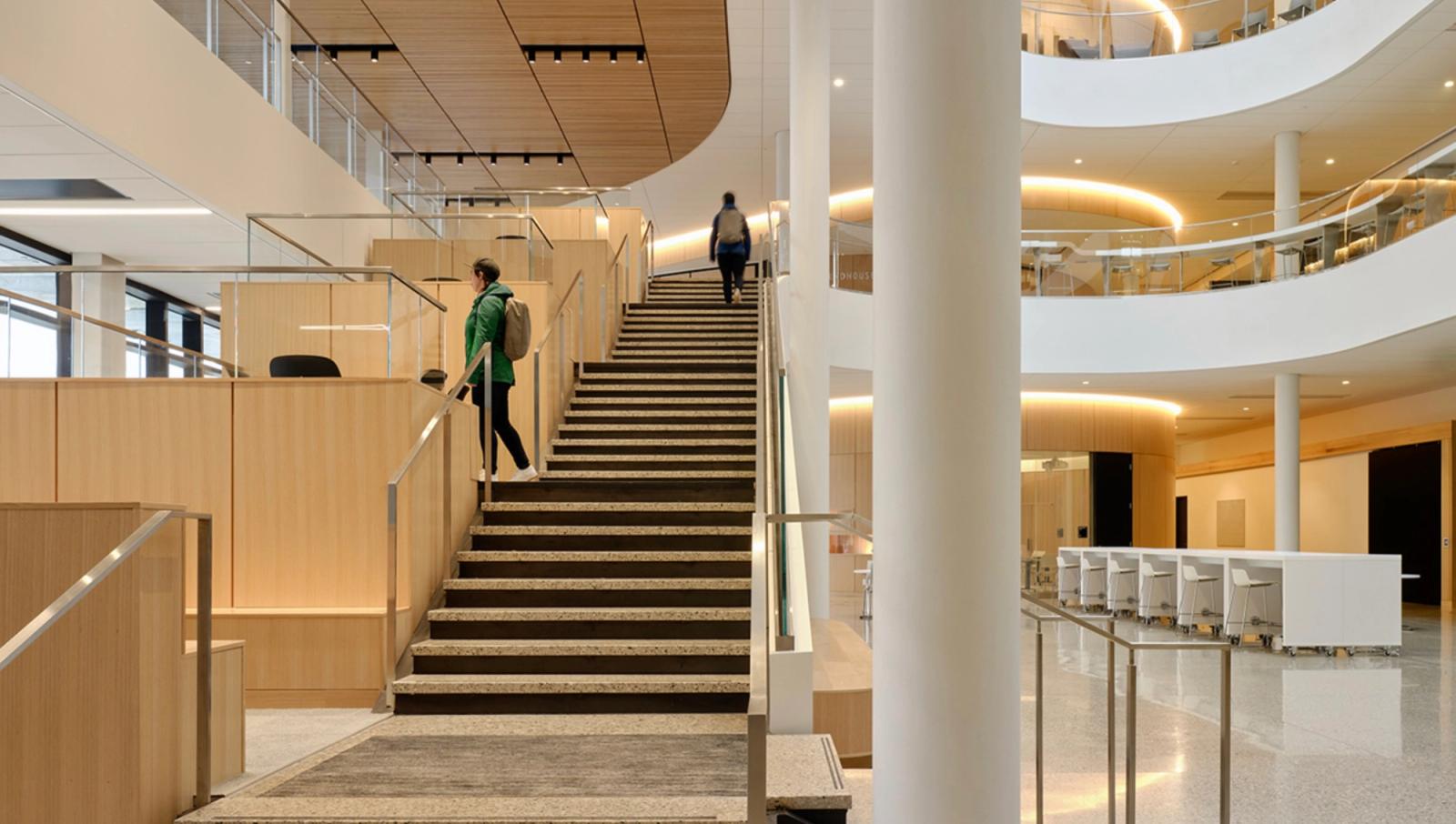
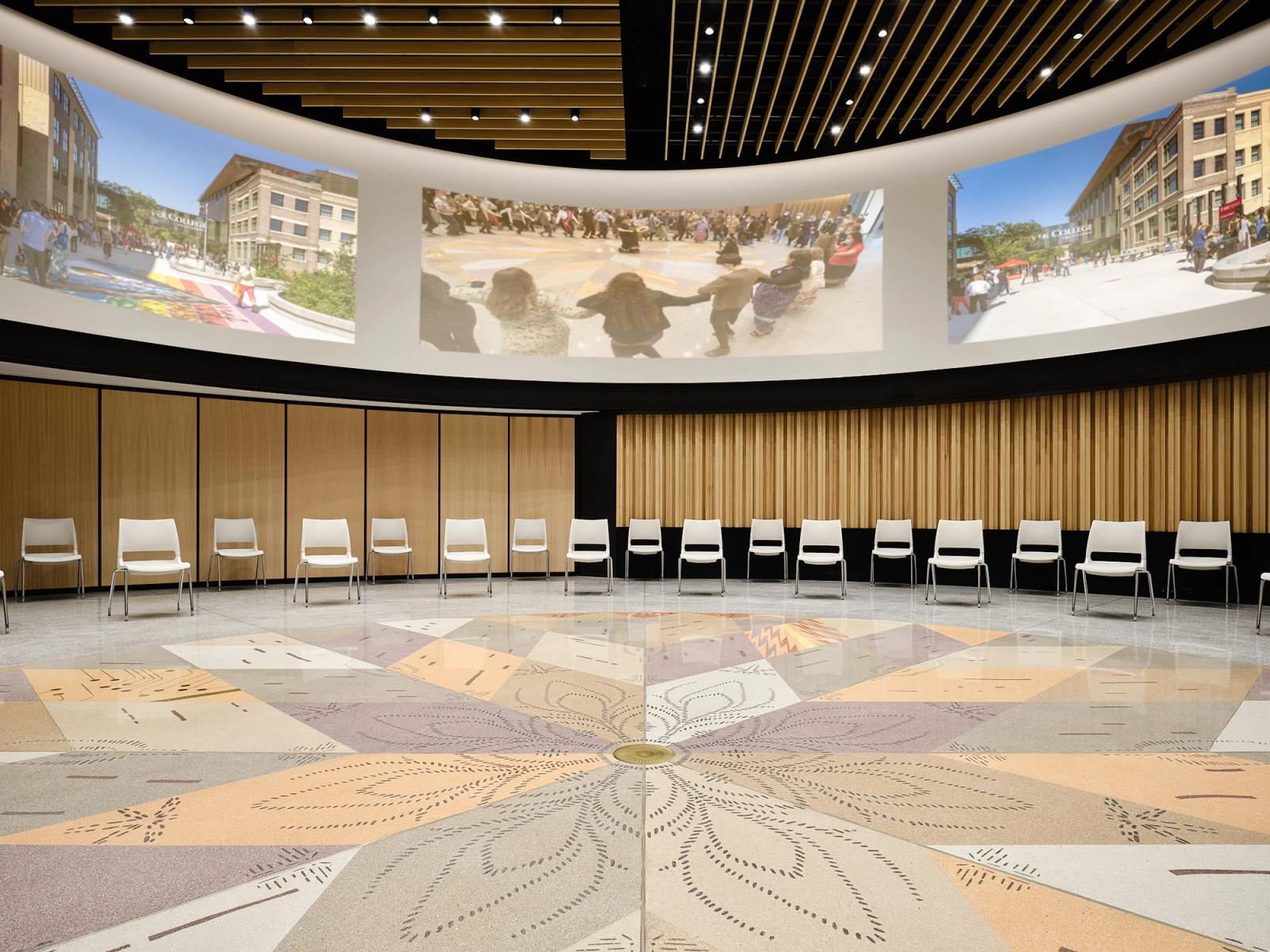
Manitou a bi Bii daziigae at Red River College Polytechnic
When two Winnipeg architectural firms merged in 1964, the combined name was a mouthful. Waisman Ross had been founded in 1953 and Blankstein Coop Gillmor Hanna in 1956, and putting both names together on one letterhead was never going to work. The partners solved the problem by renaming the firm after the modernist building they had designed at 10 Donald Street.
Six decades later, Number TEN Architectural Group has a portfolio that includes the Royal Manitoba Theatre Centre, the Winnipeg Art Gallery, and The Forks Market. The firm’s work reaches across Western Canada and beyond, from urban centers to remote communities, and from small renovations to large-scale contracts.
With that range of work, quality assurance/quality control can’t be a single process for Number TEN. It changes with the client, the code jurisdiction, and how the project is delivered. When a construction manager is involved from the start, questions about executing the build are addressed while the design is still developing. But on a traditional design-bid-build project, contractors are not selected until the drawing set is completed and out for bid, so the plans have to answer every question on their own.
Trent Piazzoni, an Associate and Project Architect at Number TEN, puts it plainly. “The drawings need to communicate the design intent as clearly as possible, leaving as little room for misinterpretation as we can.”
Earlier this year, Number TEN joined the beta program to test Pirros’ latest product: a quality intelligence platform. The software uses AI-powered design review to check drawing sets for accuracy against a firm’s standards, specifications, and building codes. Today, many firms run their QA/QC process by hand on compressed deadlines, resulting in errors and omissions that cause expensive RFIs, rework, and construction delays. Modern Architectural drawing sets are complex and continue to evolve throughout design. The beta program provided Number TEN an opportunity to explore how AI-assisted reviews could help apply establish standards more consistently and identify items requiring attention early, when they’re least time-consuming to address.

How Number TEN decides what to adopt
Nothing at Number TEN is rolled out firmwide right away. When a new tool becomes available, two or three team members test it long enough to assess its effectiveness. Only then does the firm consider a wider rollout. Trent's own test is simpler: would I use it, would it make my job easier, and can I make a strong case for adoption to the firm’s partners?
The process of adopting Revit in 2009 provides an illustrative example. Initially, three team members learned Revit first, and tried it on a single pilot project. Once a month, the firm held a lunch-and-learn where team members would teach colleagues tips and tricks in Revit. The pilot expanded project by project, and today, every drawing set in the office is produced in Revit.
Pirros went through the same filter. A similar working group for digital tools tried the QA/QC platform first, and the same standard applied. Would this make the job easier, and is it worth the time?
"Number TEN has always been very progressive about trying to adopt technology, but I don't think they go too soon either. When AI first came out, there was a lot of excitement around it, but we were still trying to understand where it could provide practical value. We’re now at a point where we are seeing applications that could genuinely support our work.”
Trent Piazzoni
Why they joined the beta
Improving quality control was already high on the firm's list of priorities for the year. The office has been growing and projects were getting larger and more complex, so the review process had to keep up. Jessica Cembroski, an Associate and Project Delivery Manager, identifies the constantly evolving drawings across design phases as a key challenge.
"The design is always changing. The Revit model is a living organism, and design is iterative. The Revit model is continually evolving, and changes can have implications across multiple disciplines and drawing areas. That is why ongoing coordination and QA/QC remain so important. We think, in theory, that details should work just fine, and then later down the line, oh, that's a coordination problem. We're always doing QA/QC up until the last minute on production drawings."
Jessica Cembroski
A set that changes daily is hard to review once, and reviewing it continuously by hand is not realistic. Number TEN wanted something that could regularly review the full set and flag items for the project team’s consideration as the drawings evolved. “It’d be another set of eyes for us,” says Jessica, supporting, rather than replacing, the team’s existing process.
Jessica has been running the setup. She links projects through Autodesk Construction Cloud, schedules the reviews, and chooses which codes each review checks against. For Number TEN, that meant the Alberta Building Code and the National Building Code, rather than the American rulesets most tools ship with. For a firm that regularly works across provincial lines, that choice matters.
What the reviews have demonstrated
The clearest result so far came on a project on a tight schedule to go out to bid — precisely the stage where a late change becomes costly. Running the set against the current building code surfaced sloped glazing and safety glass requirements that had been omitted from the set, allowing the team to carry those requirements straight into the specification.
But some flags are smaller than that. Each flag has the rule it came from and the reasoning attached, so an architect can judge in a few seconds whether it needs attention and move on. For experienced staff, a prompt is usually all it takes.
"When you’re working on a school, experience tells you many of the items that require particular attention. This platform can reinforce that process by consistently highlighting relevant items that may warrant another look.”
Trent Piazzoni
Newer staff get something different out of it. Junior designers learn building codes, in the team's words, "not by going and reading page by page, but by highlighting the things you need to think about in the project." After several reviews, they arrive at the next one already knowing where to look.
Another Set of Eyes
For Number TEN, the value of Pirros is not that it replaces the judgment of an experienced architect. It gives that judgment another layer of support. By continuously reviewing the set against the codes and standards the firm actually works with, Pirros can surface issues while there is still time to address them. For a firm that has spent decades adapting its practice to new ways of working, it represents a natural next step: using technology to make a rigorous QA/QC process more continuous and easier to carry across every project.