

Let’s Partner on Conversations That Matter in AEC
Pirros partners with editors, podcast hosts, conference organizers, and industry voices to explore what’s actually changing inside architecture and engineering firms.


































































About Pirros
Pirros is the AI project hub for architecture and engineering firms. We connect design knowledge across every project, team, and office, standardize production workflows, and embed quality control—so teams produce better construction drawings, faster.
Detail & family management
Every detail and family your firm has drawn, searchable across all your projects.
Quality Management System
Check your projects against codes, specs, and your firm’s own standards—before the set goes out.
Mira
Works beside you in Revit, with your firm’s knowledge behind it.
Who backs us
Ryan Sutton-Gee, Tracy Young, & Ralph Gootee
Co-founders of PlanGrid

Ara Mahdessian & Vahe Kuzoyan
Co-founders of ServiceTitan




Meet our speakers

Ari Baranian
Co-Founder & CEO, Pirros
BackgroundAri is a former structural engineer who experienced firsthand the operational inefficiencies at the center of AE practice. Also a software engineer, Ari co-founded and built Pirros to be mission control for every layer of an AE firm. Pirros is proudly Y-Combinator-backed and profitable.
PositioningAri speaks as a builder who was a practitioner first. He brings a founder-level perspective on why the current model of design production is broken and what the next generation of AE operations looks like. Having worked inside design firms as both a structural engineer and programmer before building Pirros, he speaks with authority grounded in both sides of the table.
Best for founder-focused podcasts, AEC leadership panels, technology strategy conversations, and conference keynotes.

Peter Johann
COO & Co-Founder, Pirros
BackgroundPeter was a structural engineer at KPFF, where he saw the same problem play out on project after project: firms redoing work not because they had to, but because they couldn’t find or trust what already existed. He built Pirros to solve that directly.
PositioningPeter speaks as someone who lived the problem at a firm level before building the solution. His perspective is grounded in the day-to-day reality of design practice, which gives him a practitioner’s clarity about what design teams actually need.
Best for technical podcasts, product deep-dives, AEC technology platform discussions, and developer- or product-focused industry conversations.

Ross Wagner, Assoc. AIA
Head of Industry and Product Strategy
BackgroundRoss Wagner, Assoc. AIA worked in architecture before stepping into design technology to drive broader industry change. He went on to play a key role at PlanGrid, helping scale the company from under $10M to over $100M in ARR and contributing to its acquisition by Autodesk. At Autodesk, Ross led GTM industry teams supporting AECO customers. Today, as Head of Industry and Product Strategy at Pirros, Ross brings both practitioner and operator perspective to helping firms capture their collective memory, making the best of what they have already built easy to find, trust, and share across every project and team.
PositioningRoss is one of the few people in AEC technology who has operated at every layer of the stack: as a licensed architect, as a growth operator who helped take a category-defining platform from early traction to acquisition, and as a GTM leader at the largest software company in the industry.
Best for practitioner-focused podcasts, BIM and design technology community conversations, AEC technology business discussions, and webinars targeting AE firm operators.
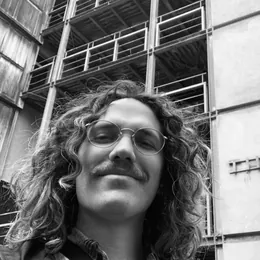
Isaac Nemzer
Head of Engineering, Pirros
BackgroundIsaac founded and scaled Yext’s first international engineering team in London, growing it to serve over 100 accounts, then came to Arup where he saw firsthand how much engineering knowledge lives in past projects. He leads engineering at Pirros.
PositioningIsaac speaks as the engineer building the system, with a view of the problem from inside an AE firm. His perspective is on what it takes to make AI useful against a firm’s own project history rather than a general-purpose model, and on building an engineering team from nothing.
Best for engineering and AI-focused podcasts, technical deep-dives on applying AI to firm data, and conversations about building and scaling engineering teams.
AI in Architecture & Engineering
How AI is reshaping the practice of architecture and engineering—and why AE firms face a different set of challenges than any other industry.
Autodesk Built an AI Assistant for Revit. Who Is It Actually For?
Early testing shows a tool that fails more often than it delivers, and Autodesk admits it is aimed primarily at beginners. The more useful question isn’t whether it works—it’s who AI in Revit is for. If the answer is beginners, this is a better onboarding experience. If it’s production teams, the missing layer sits outside the tool: the firm-wide knowledge underneath it, which Autodesk will never have access to. Only the firm does.
AI Is Only as Smart as the Data You Feed It
AI trained on single-project data struggles to deliver value inside AE firms. The biggest opportunity is the opposite: ingesting and applying data from across projects. This conversation hands AE buyers the questions that separate contextually-rooted AI from generic tools—does it unify data across projects, create learning loops between teams, and measurably speed up deliverable production?
Why AE Firms Are the Last Profession That Can Afford to Get AI Wrong
Architecture and engineering firms carry public-safety liability, regulatory accountability, and contractual exposure that most industries don’t—something headline reports miss, including the recent Anthropic study ranking AE among the least AI-exposed professions with the most room for application. Introduce AI carelessly into design production and the downstream risks—RFIs, coordination failures, construction errors—outrun the efficiency gains. This conversation examines what earns AI trust in AE: design-native training data, transparent provenance, human oversight in the workflow, and accountability structures that hold.
Design Technology & BIM Functions
The evolving roles of Design Technologists and BIM Managers inside AE firms, drawn from original survey data and firm enablement research.
Beyond BIM: How Large Design Firms Build, Staff, and Scale Design Technology Teams
Most firms don’t realize they have outgrown their design technology model until someone burns out, standards slip, or a quality gap makes it impossible to ignore. This discussion shares first-of-its-kind benchmarking from a 2026 survey of large AE firms by DIALOG and Pirros: BIM versus design technology roles, staff-to-DT ratios, and utilization targets—plus the frameworks, proven at DIALOG and elsewhere, that hold up through growth, leadership changes, and cross-functional work at scale.
The BIM Manager’s Next Chapter: From Overloaded Operator to Strategic Enabler
The 2026 DT Survey confirms what the field already feels: design technology professionals are just 4% of firm headcount on average, carrying responsibility that grows faster than the teams supporting them. BIM managers are expected to be enabler, enforcer, trainer, troubleshooter, and innovator at once—often alone. The more important conversation is not workload but trajectory. Where BIM leaders thrive, firms gave them two things: the systems and language to measure their impact on firm-wide quality and production efficiency, and the authority to evolve the role past constant firefighting.
Firm Knowledge Management & Enablement
How firms capture, retain, and activate institutional knowledge across projects, teams, and generations of talent—one of the most underreported structural challenges in AEC.
Firms Are Sitting on a Gold Mine of Knowledge—and Watching It Walk Out the Door
Every completed project is a compressed archive of solved problems: details that held up in the field, decisions that prevented RFIs, lessons the next team should inherit. Most of it is never used again—not because firms don’t value it, but because they have never had the infrastructure to extract and reactivate it. Every time a project closes or a senior designer leaves, that intelligence scatters back into folders and aging models, and the firm’s institutional intelligence never compounds.
The Lessons-Learned Trap: Why Every Fix for the Knowledge Problem Fails
Retrospectives, lessons-learned documents, shared drives, internal wikis—most AE firms have tried them, and they almost never work. The reason is structural: every traditional solution treats knowledge management as a documentation problem when it is a workflow problem. Post-mortems produce documents. Documents don’t get opened under deadline pressure. The next team restarts the same cycle. This pitch explores what separates the firms that broke it—not better documentation, but learning embedded directly into the moment of production.
Firms Are Buying More Sophisticated Software—and Losing the Ability to Run It
Architecture firm leaders’ confidence in navigating digital disruption fell from 74% to 46% in a single year—not because tools got worse, but because enablement hasn’t kept pace. Only 64% of AEC firms run continuous learning programs, and nearly half lack the resources to design them, even as the software stack grows more complex every year. Drawing on Pirros’s Enablement Guide, built from hundreds of AE firm deployments: AEC’s digital transformation problem is an enablement gap, not a technology one.
Design Production Efficiency & Quality
Where quality, speed, and consistency are constantly in tension—and the stakes of getting it wrong run from RFIs to regulatory non-compliance to firm reputation.
Why Quality Has to Be Taught, Not Policed
New designers arrive with different learning styles and a different relationship to technology than any prior generation, while the apprenticeship model—absorbing a senior designer’s judgment over years of proximity—breaks down under remote work, fast-paced projects, and lean teams. Meanwhile quality control stays reactive: a model marked up in red, a principal catching a detail error at permit, an RFI on an ambiguous drawing. Both problems share one fix—surfacing real, vetted examples of firm work at the exact moment a designer needs them.
Standards Don’t Scale in AEC. The Approval Process Is Why.
Most AE firms have tried to scale quality with stricter standards, tighter templates, and more enforcement—and watched fragmentation increase anyway. The common diagnosis is that teams don’t follow standards under project pressure. The more accurate one is that the standards approval process itself doesn’t scale. Firms invest in defining what ‘good’ looks like, then leave getting new content approved as a linear, multi-stakeholder review that becomes a bottleneck as the library grows.
The Hidden Cost of Starting From Scratch
Most AE firms know, intuitively, that their teams spend too much time recreating work that already exists in a past project. Few have measured it. Pirros data from firm deployments shows designers spend an average of 15–30 minutes searching for a single detail—and often recreate it from scratch anyway when they can’t find something reliable. Aggregated across hundreds of projects, that waste compounds into millions of dollars of billable time redirected away from design.

Pirros: The AI Project Hub for AE Firms
The Search Problem AE Firms Have Accepted for Too Long
The biggest productivity drain in AE firms is not a lack of capacity—it is time spent searching for work that already exists. Pirros connects a firm’s entire library of Revit details and families and makes it instantly searchable, with no manual tagging required. On average, firms with Pirros spend 50% less time opening models, upgrading, and previewing Revit content. Lake Flato Architects save 5 minutes per detail found and 15 minutes per detail download, recovering more than $200,000 annually in billable time.
How Pirros Makes Trusted Content the Default, Not the Exception
AE firms produce the design documents that determine whether buildings are safe to occupy. When a detail is wrong, the consequences run well past a revision cycle: construction errors, code violations, real liability. Most of those errors start with a designer working from an outdated detail or copying from the wrong project. Pirros tightens that exposure—automatic de-duping and comparison, vetted content surfaced as the easiest thing to find, past-project details kept in reference-only mode, and a live detailing environment for markup and review before anything reaches a drawing set.
A Firm’s Standards Are Only as Strong as Its Ability to Enforce Them
Defining firm standards is the easy part. Keeping them alive across projects, offices, and years of turnover is where most firms lose ground—few have the tools or the resources for the administrative burden of policing them. Pirros gives BIM leaders and standards champions the infrastructure instead: automated standard content suggestions based on usage across projects, AI that eliminates manual tagging and organization, and in-platform flagging and vetting that saves firms from the review-by-committee bottleneck.
Let’s build something together.