Your Revit Models Know More Than Your Firm Does: AEC's Missing Digital Step
Digital transformation in AEC went from the cloud to the digital twin and skipped a step: the firm knowledge in old Revit models, CAD details, emails and RFIs.

A few months back, I wrote that software vendors have a duty to steward this industry through digital transformation. I want to come back to that, because I think we have been stewarding it toward the wrong step.
Start with what digital transformation in AEC actually is: what you can do with your data.
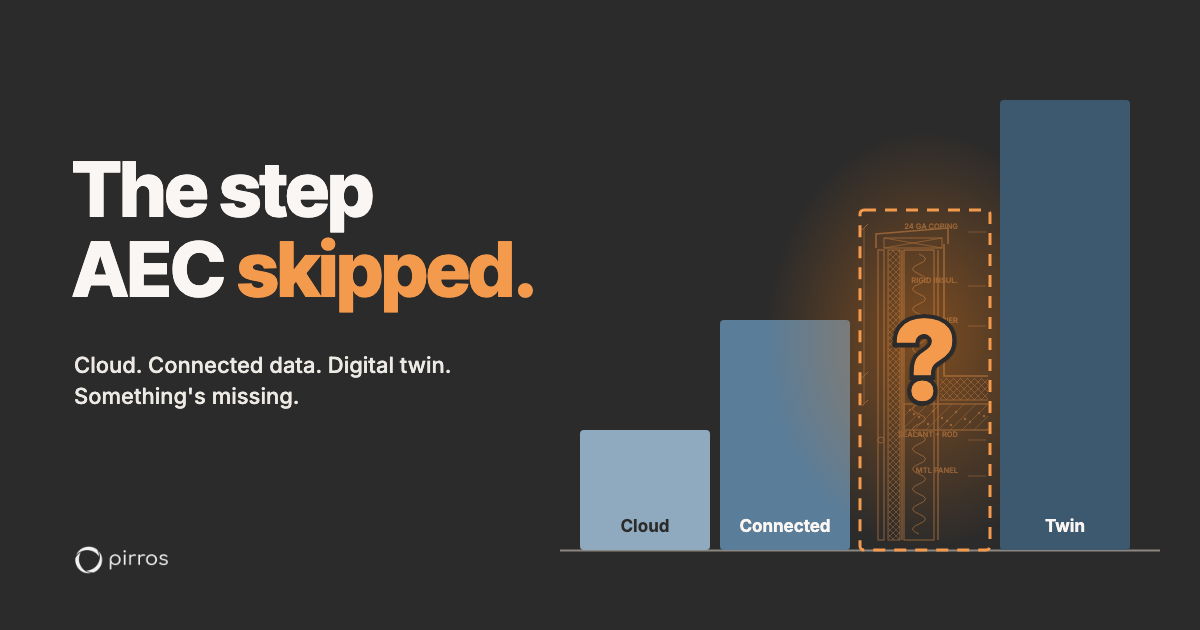
For years, we stood in front of AEC firms and drew the same digital maturity ladder:
Cloud at the bottom. Get off the server. Then connect the data so it moves between tools instead of sitting trapped in them. Then use that connected data to run the business better, in dashboards like Power BI and Tableau. At the top, the digital twin: a digital replica of the building that knows itself.
It's a good story. Owners loved it. It sold a lot of software.
Here is what I would change, and what is already changing as we speak.
We spent a decade pointing at the top step. We spent almost none of it on the data already sitting on the floor and data that even looked backwards. It was all about looking forward.
Where does an AEC firm's data actually live?
Think about what an architecture or engineering firm manages:
Countless gigabytes' worth of models that your firm has ever produced, and the BIM metadata behind all of it. Every .rvt file across a decade of Revit versions. The families and type catalogs, detail views, keynotes, view templates and sheet sets. The CAD details that never made the jump to Revit. Your project management tools. Years of email threads where the real decisions got made. Site photos. Issue logs. Job walk notes. RFIs, change orders, RFPs, the list goes on.
Architects and engineers manage an enormous amount of data on every project. The problem is that most of it does not talk to anything else. Bluebeam's AEC Technology Outlook 2026 found only 11% of firms call themselves fully digital. Nearly 40% report trouble collaborating across a project's life, especially when teams are siloed between design, construction and operations.
That is not a storage problem. Storage has been solved. The problem is that none of it can reach the work. A detail drawn in Revit 2019 still holds a decision your firm made. It just can't answer a question.
What happens when you index your past Revit projects?
When a Pirros customer starts indexing its own past projects, its firm standards double in the first month. After a year, they grow six to eight times over.
Nobody created six to eight times more knowledge in a year.
That knowledge already existed. It was in a model from 2019, or in a CAD detail nobody ever converted to Revit, or in a folder nobody opens, or in the head of the one person everybody asks. The only thing that changed is that the firm could finally see it.
Legacy CAD is the biggest blind spot here. Most firms moved to Revit years ago and left their best AutoCAD details behind, along with the decisions baked into them. That's lost knowledge sitting one conversion away.
Firms are not short on knowledge. They are short on reach.
The four stages of AEC digital maturity
Here is the ladder as I would draw it now:
- Cloud. Get off the server.
- Connected data. APIs move the model, the schedule, the cost and the correspondence between systems.
- Firm intelligence. Your own projects, standards and decisions become something people and AI can query, and that proactively works with your teams.
- Digital twin. The building that knows itself.
Getting to the cloud was step one, and this industry took fifteen years to do it. Fair enough.
Step two is connected data. Data moving between systems through APIs, so the model, the schedule, the cost and the correspondence stop being separate universes. That is where a lot of firms are working right now, and it is why you are seeing the whole industry push harder on cloud-based models.
There is a step after that one, and it is barely charted.
Call it the harness. Firm intelligence is the layer that lets your Revit models, standards and project history answer questions grounded in your own work.
And it is proactive. It does not sit in a folder waiting for someone to search. It works with your teams, puts the firm's standards in front of them while the work is happening, and holds them accountable to what the firm already decided.
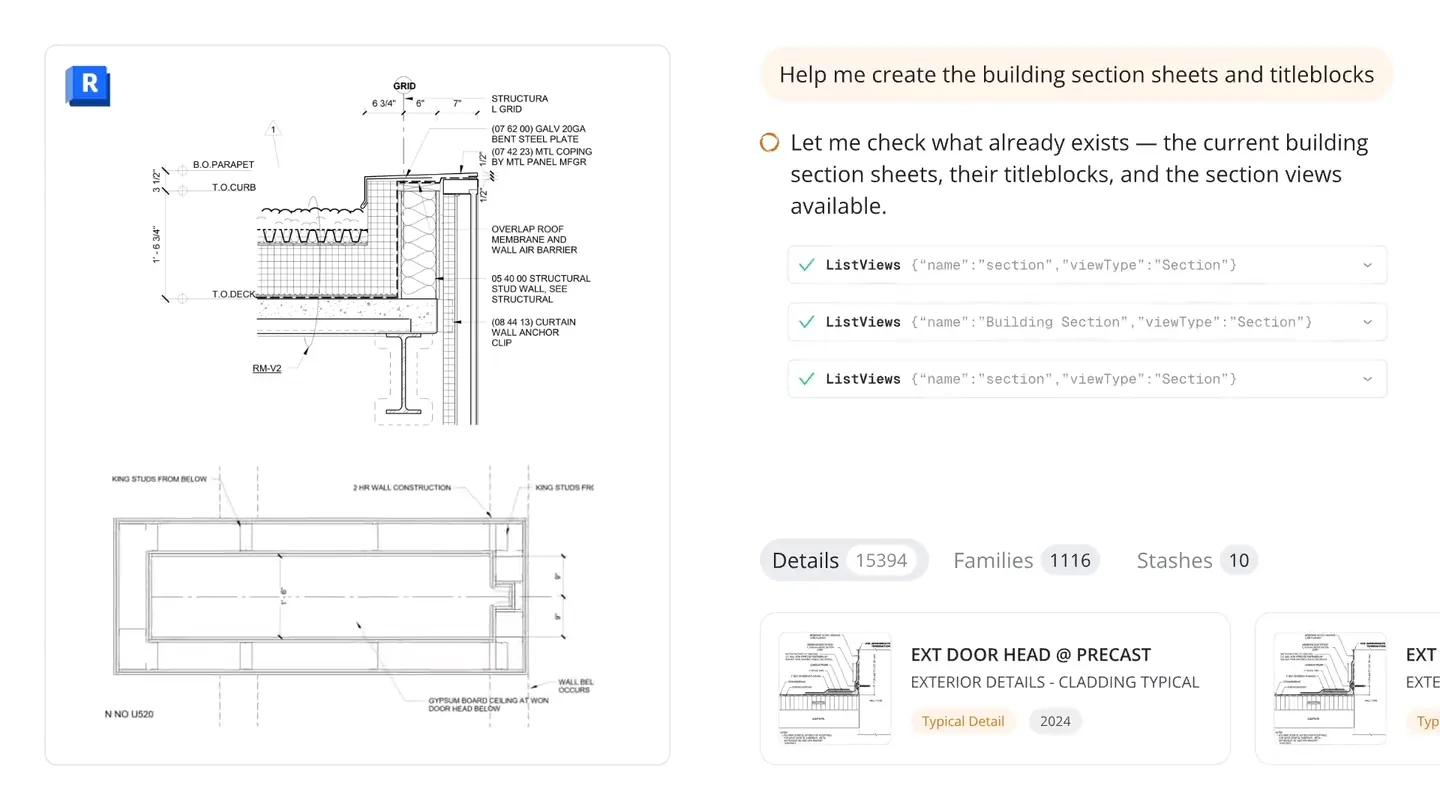
It's the connective work that lets your systems query each other and hand back an answer that is grounded in your firm's work. Not a model guessing in a professional tone. A model that can reach your standards, your past decisions and the reasoning behind them, and show you where the answer came from.
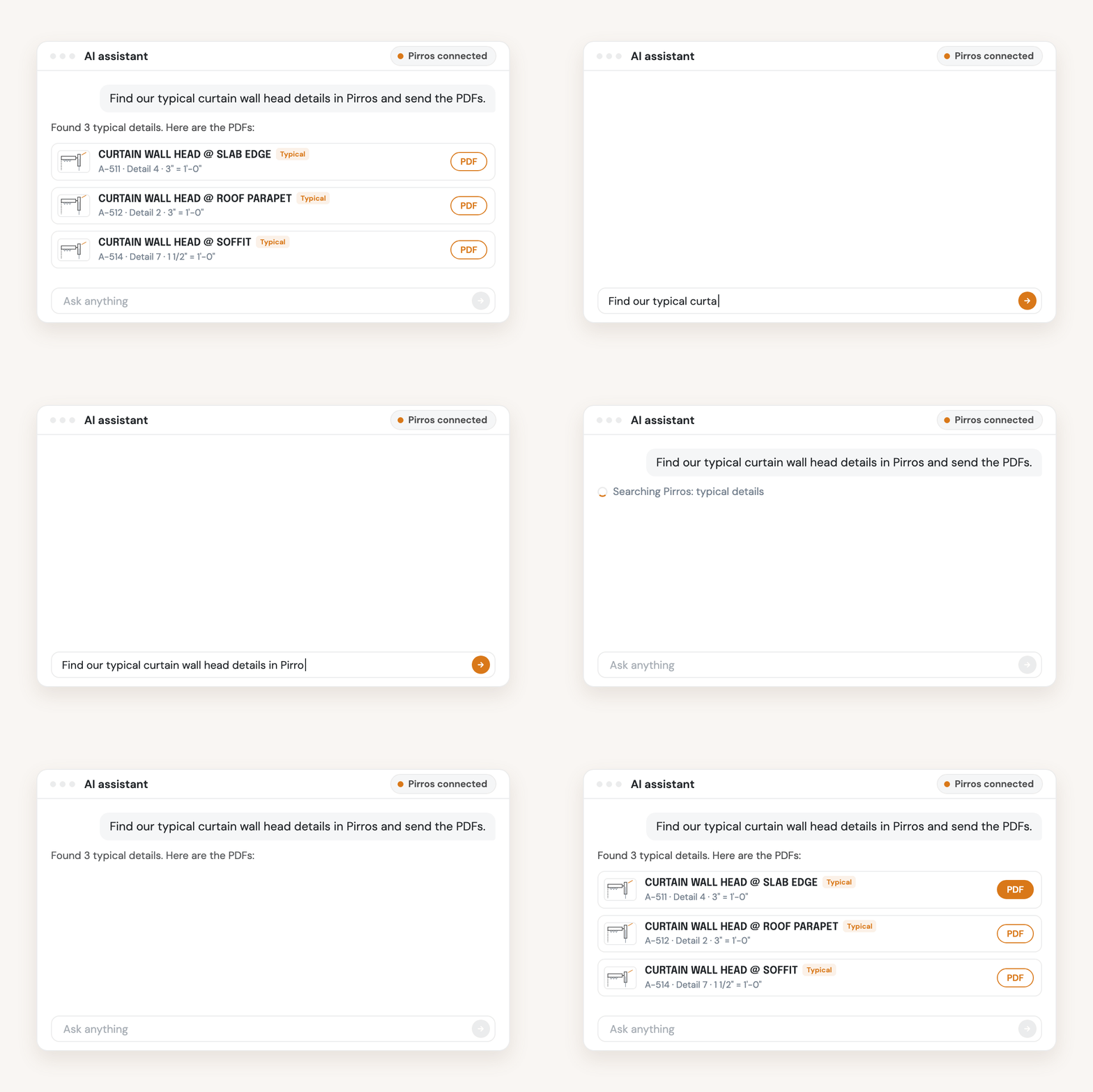
Three years ago, that work was expensive and custom. It is neither of those things now. Connectors like the Pirros MCP put a firm's details and families inside Claude and ChatGPT. That is the real news, and almost nobody in AEC is talking about it, because we are all still talking about the twin and AI feature sets.
Why a digital twin can't capture design reasoning
There's a senior architect at a design firm in Nashville who does something I keep coming back to.
Instead of just handing standard details down to newer architects, he marks them up with questions. What needs to change here? What would you do differently? What makes a quality detail?
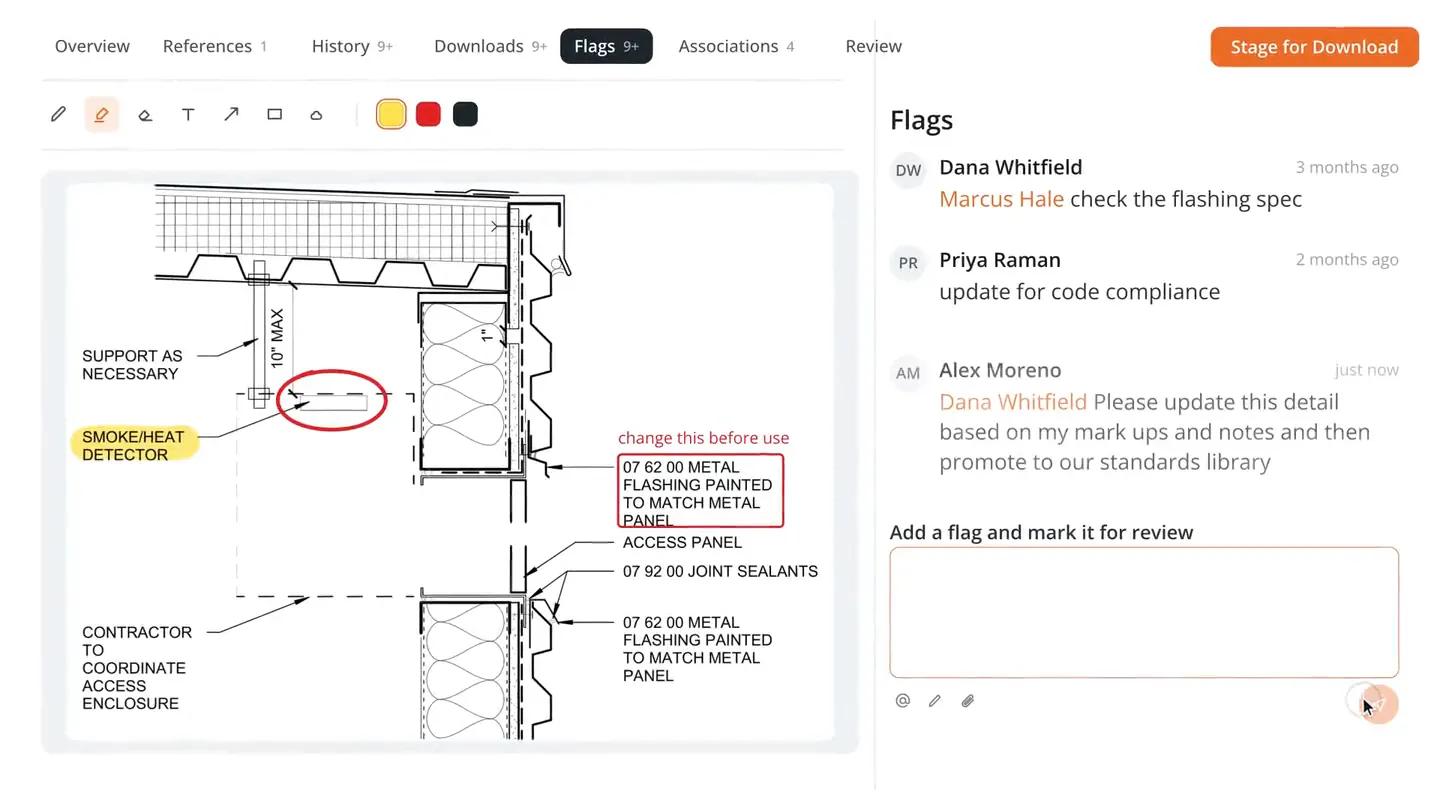
That is the thing worth keeping. Not the detail. The thinking behind the detail.
A digital twin captures a building in enormous fidelity. It has never once captured that.
Do you still need a digital twin?
I'm not saying the twin was wrong. It is a real destination, and the firms that reach it will be better off.
I am saying that you don't get there by aiming at it.
You get there by making today's work legible: to your people first, to your AI second. Everything above that step is downstream of it, and a firm that skips it just arrives at the summit with confident answers built on nothing.
We spent a decade digitizing buildings. We never digitized the firm.
Closing that gap is the work at Pirros.
If you handed an AI everything your firm knows right now, what would it actually find?